
A blood-based triage tool to support colorectal cancer assessment in symptomatic patients.
ColoSTAT® provides additional clinical information to help guide referral decisions.
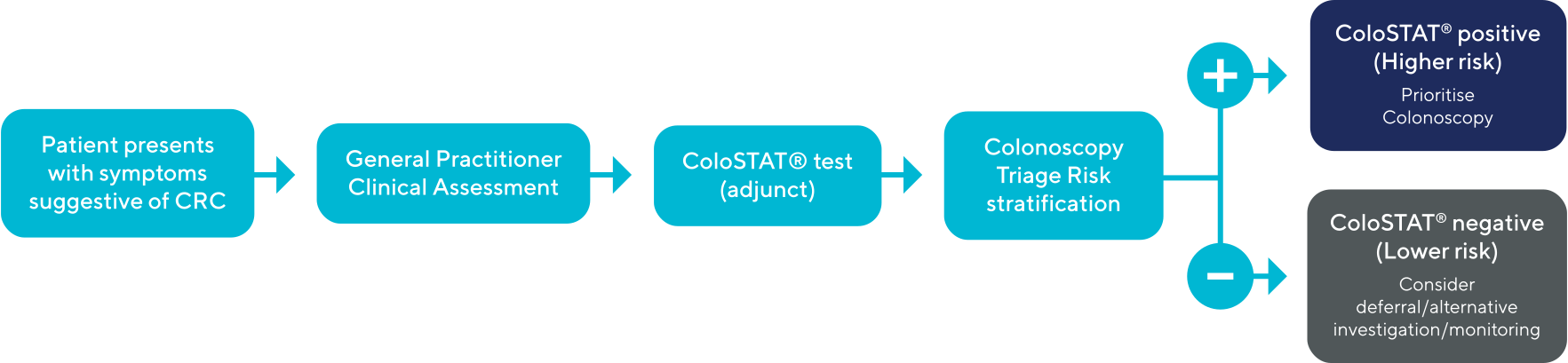
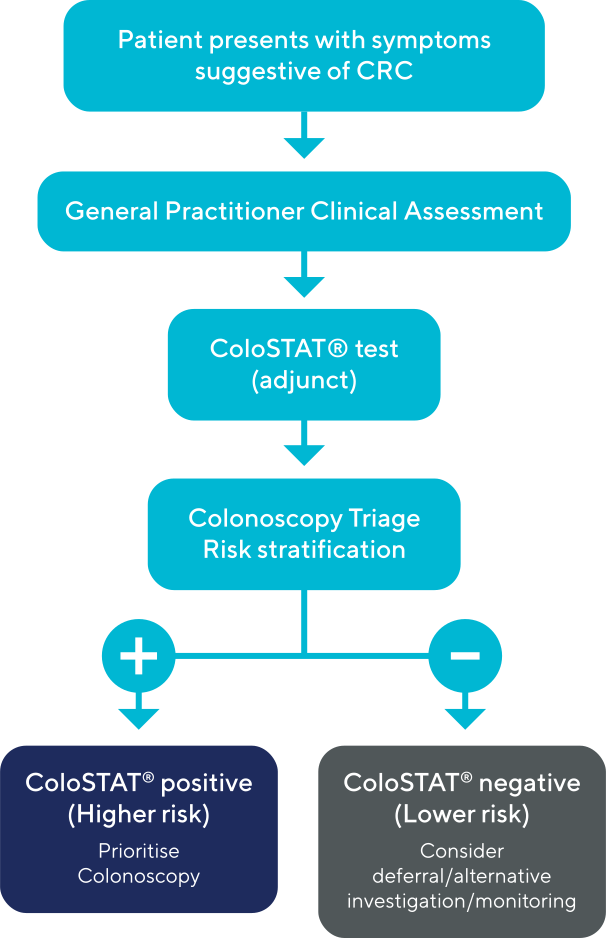
Where ColoSTAT® fits in the symptomatic pathway.
Patients presenting with vague or non-specific abdominal symptoms are common in clinical practice, and determining who requires further investigation can be challenging.
ColoSTAT® is a blood-based triage tool that provides additional information to support clinical decision-making. It helps guide whether referral for colonoscopy is appropriate, particularly when symptoms are unclear, FIT is unsuitable, or access to colonoscopy is limited.
WEBINAR
Smarter Triage for Bowel Cancer Symptoms: The Role of ColoSTAT® in Reducing the Colonoscopy Burden
For General Practitioners
Use cases in primary care
ColoSTAT® is designed to support decision-making in patients presenting with symptoms suggestive of colorectal cancer, particularly where the clinical picture is unclear.
It may be considered in situations where:
- Symptoms are vague or non-specific
- The need for referral is uncertain
- A stool-based test (FIT) is declined, unsuitable, or unlikely to be completed
- There is concern about delays in access to colonoscopy
- Additional information would support discussion with the patient regarding next steps
It is particularly valuable for:
- Frail or elderly patients where invasive procedures carry higher risk
- Patients aged 45–84 with symptoms of bowel cancer
- Patients reluctant to perform stool-based tests (FIT)
- Patients with persistent symptoms in difficult-to-characterise cases
WORKFLOW INTEGRATION
ColoSTAT® is designed to integrate easily into routine primary care workflows, with no additional preparation required.
- Order: Request ColoSTAT® similar to routine blood tests using the ColoSTAT® Test Request Form
- Pay and Collect: Patient pays for the test and attends a 4Cyte Pathology collection center for a blood draw.
- Analyse: Samples processed in a NATA-accredited laboratory
- Review: Results returned promptly to the referring clinician to support timely clinical decisions
INTERPRETING RESULTS & CLINICAL ACTION
Positive result: A positive result indicates an increased likelihood of colorectal cancer and supports referral for colonoscopy.
Negative result: A negative result indicates a low likelihood of colorectal cancer. In appropriate clinical contexts, this may support a decision to monitor symptoms rather than proceed immediately to colonoscopy.
Clinical Note: ColoSTAT® is not a diagnostic test but a triage tool to support decision-making. Results should always be interpreted alongside clinical assessment and other investigations.
EVIDENCE SNAPSHOT
91% sensitivity for all stages of colon cancer
ColoSTAT® detected 9 out of 10 colorectal cancers in symptomatic patients, including earlier-stage disease. This supports timely identification of patients who may require further investigation.
99.4% Negative Predictive Value
Validated across multiple populations
Supports more targeted referrals
Many patients referred for colonoscopy do not have colorectal cancer. ColoSTAT® provides additional information to help prioritise referrals and support more appropriate use of colonoscopy.
Stage-Specific Sensitivity
A critical concern for any early detection test is whether sensitivity is maintained across cancer stages, particularly Stage I and II disease where surgical intervention is most likely to be curative. ColoSTAT® demonstrated equivalent sensitivity across all CRC stages with no statistically significant difference between early and late-stage disease.
Source: Internal data, Rhythm Biosciences 2025
Incorporate ColoSTAT® in your practice today
Contact us →
Disclaimer
ColoSTAT® is a blood-based in-vitro diagnostic aid used for the triage of colorectal cancer (CRC) in those aged 45–84 with symptoms suggestive of a potential CRC diagnosis. ColoSTAT® is not diagnostic and requires professional interpretation. ColoSTAT® is not a replacement for diagnostic colonoscopy or for surveillance colonoscopy in high-risk individuals.
For Gastroenterologists & Specialists
Why ColoSTAT® Matters for Your Practice
In Australia colonoscopy services are increasingly under pressure, driven by high volumes of symptomatic referrals but relatively low diagnostic yield for colorectal cancer. This creates a challenge in prioritising patients most likely to benefit from timely investigation, particularly across both public and private practice settings. ColoSTAT® supports smarter triage upstream by providing additional clinical information before referral — helping prioritise higher-risk patients and optimise the use of colonoscopy capacity.
Why Use ColoSTAT®
- Improves referral quality: Helps identify patients more likely to benefit from colonoscopy
- Supports prioritisation: Enables more effective triage of symptomatic patients
- Reduces low-yield procedures: Supports more appropriate use of colonoscopy capacity
- Complements FIT: Adds value in FIT-negative but symptomatic patients
- Supports clinical decision-making: Provides additional information alongside standard assessment
EVIDENCE SNAPSHOT
These results demonstrate the ability of ColoSTAT® to support risk stratification in symptomatic patients, particularly in guiding prioritisation for colonoscopy.
| Measure | Result |
|---|---|
| Early-Stage Sensitivity | 90.7% |
| Late-Stage Sensitivity | 89.4% |
| Negative Predictive Value | 99.4% |
Source: Internal data, Rhythm Biosciences 2025
Interested in incorporating ColoSTAT® into your practice?
Contact us →
Disclaimer
ColoSTAT® is a blood-based in-vitro diagnostic aid used for the triage of colorectal cancer (CRC) in those aged 45–84 with symptoms suggestive of a potential CRC diagnosis. ColoSTAT® is not diagnostic and requires professional interpretation. ColoSTAT® is not a replacement for diagnostic colonoscopy or for surveillance colonoscopy in high-risk individuals.
ColoSTAT® ACCESS PROGRAM
Be among the first clinicians to integrate ColoSTAT® into symptomatic pathways.
The ColoSTAT® Access Program provides early clinical access, supports independent decision-making, and support its use in real-world practice.

